Complete Roman Polanski Retrospective to Precede Carnage's NYFF Premiere
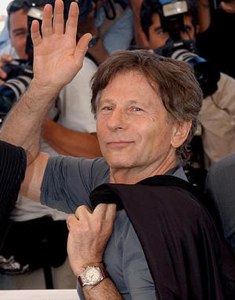 More upcoming happenings for you New Yorkers: The Museum of Modern Art announced today that it will host a complete retrospective of the films of Roman Polanski, including everything from early student work from the 1950s through his groundbreaking thrillers of the '60s and '70s, his eventual Oscar darling The Pianist (which star Adrien Brody will introduce on opening night, Sept. 7) and beyond. The only movie not included will instead debut across town when Carnage receives its North American premiere as the New York Film Festival's opening selection. Good timing, right? Read on for the full release.
(The series' full schedule can be found at MoMA's Web site.)
===================
FALL SEASON KICKS OFF WITH MAJOR RETROSPECTIVE ON ROMAN POLANSKI AT THE MUSEUM OF MODERN ART
Roman Polanski
September 7-30, 2011
The Roy and Niuta Titus Theaters
New York, August 10, 2011--The Museum of Modern Art recognizes the achievements of
Roman Polanski with a complete retrospective of the filmmaker's works, September 7-30, 2011, in The Roy and Niuta Titus Theaters. Over the course of a half century, Polanski has become widely recognized as one of the premier international filmmakers, directing films in Poland, England, the U.S., Italy, and France and working with distinguished actors such as Jack Nicholson, Adrien Brody, Catherine Deneuve, Mia Farrow, Ben Kingsley, and Nastassja Kinski. Polanski's films have garnered eight Academy Awards and over 25 nominations, among many other accolades. The retrospective will include all of Polanski's 18 feature films and a collection of his early student short films. This exhibition is organized by Charles Silver, Curator, Department of Film, The Museum of Modern Art.
Born in Paris, Polanski moved to Poland, the homeland of his parents, shortly before the start of World War II. Losing his mother in a concentration camp, Polanski lived in hiding as a Jewish fugitive in Nazi-occupied Poland. After the war ended, Polanski reunited with his father and shortly thereafter enrolled at the National Film School in Lodz, where he directed a number of short films including A Murderer (1957), Two Men and a Wardrobe (1958), and When Angels Fall (1959), all of which will be shown as part of the Polanski's Student Films program in this exhibition. In 1962, Polanski directed his first feature film, Nóz w wodzie (Knife in the Water), as his thesis for film school. Nominated for an Academy Award, the dark film follows a wealthy couple who pick up a mysterious hitchhiker while embarking on a weekend boating excursion.
Polanski continued his career in England, directing three films: Repulsion (1965), a critically acclaimed horror film that follows a young woman, played by Catherine Deneuve, as she slowly transforms into something demonic; Cul-de-Sac (1966), a dark comedy in which a pair of gangsters hold a couple hostage in a castle; and The Fearless Vampire Killers, or: Pardon Me, but Your Fangs Are in My Neck (1967), Polanski's parody of vampire movies and horror classics. In 1968, Polanski directed Rosemary's Baby, his first American film. Polanski's nightmarish vision of evil on Manhattan's Upper West Side received numerous awards, including an Oscar for Best Supporting Actress (Ruth Gordon), and is listed in the top 10 of the American Film Institute's list of the 100 best thrillers.
Throughout the next four decades, Polanski continued to make films internationally. Notable films include Chinatown (1974), which received 11 Academy Award nominations, including Best Actor for Jack Nicholson's portrayal of a private investigator; Tess (1979), the Academy Award-nominated story of a young peasant girl who becomes the object of affection of two men; Pirates (1986), Polanski's homage to childhood favorite Errol Flynn; Death and the Maiden (1994), based on the play by Ariel Dorfman, about a former political prisoner who crosses paths with her captor years after the fall of his regime; Oliver Twist (2005), Polanksi's recreation of the novel by Charles Dickens, which reflects his experiences as a child in Nazi-occupied Poland; and The Ghost Writer (2010), Polanski's latest award-winning film about a ghostwriter who uncovers a life- threatening secret while writing the memoirs of a former British prime minister.
The retrospective opens with Polanski's Academy Award-winning film The Pianist (2002), on September 7. The biographical film tells the story of Jewish musician Wladyslaw Szpilman as he struggles to survive in Warsaw during World War II. The film won three Academy Awards, including Best Picture; the Cannes Film Festival's Palme d'Or; BAFTA Awards for Best Picture and direction; and seven French Césars, including Best Picture, director, and actor. Adrien Brody, who received the Academy Award for Best Actor for this portrayal of Szpilman, will be in attendance to introduce the film.
###
 Subscribe to the new Movieline on YouTube


Comments
Dear MoMo,
Thanks! I thought I was going to miss 2011 without a high-brow institution honoring a serial rapist/pedophile. You have restored my faith in the sophisticated way artists are recognized. Those examples of Pol Pot bone chairs you did last year were the bomb! Can I suggest a Kadafi fashion show next year? Those are some awesome kaftans and hats that guy wears! Peace, my brothers.
A.S.
Will there be any footage of the teenage drugging/raping? I think all the stars who keep starring in his movies should be forced to watch that first.
Hi, Roman! Remember me? We shared that cab in Paris when I was in town promoting "Lost Boys?" You might be interested in a little interview I just did. Talked about some friends of your's and everyone seems to be a bit pissed. Don't worry though, you already have a pass in this town...and apparently in New York as well. See ya soon, buddy! Save me a roofie.