Movieline at the Midpoint: Have We Finally Had Our Fill of Hype?
Today and tomorrow mark the midpoint of 2010 -- and thus the midpoint of our year in movies and TV. Join Movieline in both taking stock and looking ahead.
Hype is like cholesterol: There's a good kind and a bad kind. The good kind builds organically from people's genuine interests -- or at least mostly organically, nudged by institutions with significant interests at stake. Think Avatar, which, love it or hate it, many people wanted to see for years, and whose gross proved a phenomenon of demand equal to greater than Fox or James Cameron's hucksterism. The Oscars had a good-hype year in 2009-'10 as well, setting itself up as a populist tradition (10 Best Picture nominees ZOMG!) despite the natural elitism of its organizers. Oscar season was fun! Psychotic, sure, somewhat predictable, but fun. Then came the bad hype, and boy are we paying for it.
The months leading up to summer 2010 didn't leave a lot of room for agency among moviegoers, unless you count opting for a second viewing of the Iron Man 2 trailer to check out Scarlett Johansson's stuntwoman, or avoiding the Sex and the City 2 trailer altogether in favor of... well, anything else. But your expression of either decision placed you not in a conversation, but in a big zeitgeisty assembly line of hype. Again, we're talking about the bad kind -- the kind that must be built by bludgeon and software, by brute force and whispers. The kind that conflates your complete social experience with consumption of this or that media, in part or in full. Knowing was not enough in the first half of 2010, the way it was last year with films like The Hurt Locker or Zombieland. Nor was following the first wave, as with The Hangover and The Blind Side in 2009, enough this year.
Instead, this feels like it's been the year of submission. For the first time in a long time, movies feel purely temporary, transitory and overcompensating with unprecedented avalanches of hype -- a viral incursion here, a shadowy publicity still there, cynically manufactured and yielding nothing to show for our engagement. Conversely, if this really is the new golden age of television, it's perhaps because only serialized TV can realistically pay off the deep investment we've made in its ideas, its romance and its spirit. As it advances weekly, our culture advances with it for better or worse, from Mad Men to Two and a Half Men. And when something like the series finale of Lost is hyped to within an inch of its life, there are ratings to help validate the cause -- or not.
Movies, meanwhile, have responded in desperate fashion, serializing themselves ahead of the fact -- some upwards of a year before we ever see them -- and placing completely irrational demands on the product they purport to sell. Did that quick taste of Super 8 really pique our interest enough to justify the exhaustion of its primary mystery? Namely, that it even exists at all? (Let alone that it's not opening for more than another year.) Did Disney's months-long plan to plaster every surface in Hollywood with Prince of Persia marketing compel any better relationship with its intended audience? Perhaps Stephanie Zacharek had the right idea with that one when she came to it without the encumbrance of expectations -- which wouldn't necessarily have saved those aforementioned tentpole yawners Iron Man 2 and SATC2 from their own ignominy, but it's as good a start as any.
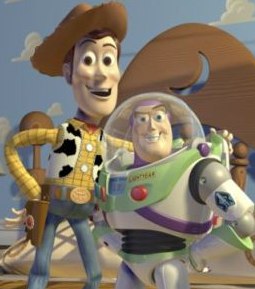 The flip side of this phenomenon occurred the week before Toy Story 3 opened. A friend and I discussed the Pixar film's own slight chances for breaking out of its predecessors' box-office shadows; at least as we saw it, the franchise was too old, with too much time between installments. Was anybody actually talking about TS3? Where was the buzz (no pun intended)?
Which was exactly the point: The buzz was in us. We conjured all the reasons such a movie might underwhelm (and by "underwhelm" I mean make $200 million as opposed to $300 million+ domestically) without recognizing those reasons were its strengths. Toy Story 3's audience had internalized the franchise's value years ago and, thanks to its medium, had no equivalent of greedy, complacent young men (I'm looking at you, A-Team) or, for that matter, greedy, complacent old men (I'm looking at you, Indiana Jones 4) to compromise its nostalgia. This was not an accident, and even if it was, Disney would never admit it. The studio knew TS3 belonged to a better class of cinema than the one it had attempted to shove down our throats a month earlier. Amid supposedly "critic-proof" middlers like The Karate Kid and Grown Ups, Toy Story 3 was hype-proof. And America was relieved.
With the exceptions of Twilight and Harry Potter, which are serialized enough (not to mention cross-collateralized and produced quickly enough) to metabolize their hype into the kind of blistering momentum we're already seeing this week, I'm having a hard time wondering how anything else in the second half of 2010 can gain from upping the hype dosage. It becomes noise after a while, both literally (those whirring Tron Legacy lightcycles) and figuratively (Harvey Weinstein's tribal, already-throbbing awards-season drums in the distance). Moreover, the spotty box-office showings and common refrains of "Worst year ever?" suggest more than just bad choices in the studio development ranks. They hint at a faltering codependency that audiences actively intend to escape -- most likely to different media.
See, we want better relationships with our movies. We want to be courted. And if Opening Day is the consummation of said relationship, we don't want to feel like we were sweet-talked into bed with a loser. We want the warmth of our TV series and the long-tail reward of our DVD's.
In other words, Hollywood, you don't have to dazzle us. You just have to earn us. And effective today, you should. We're worth it.
 Subscribe to the new Movieline on YouTube


Comments
The only movie worth watching this summer has been Toy Story 3... and all they did was tell a great story with characters the audience cares about.
This is a great read, but Karate Kid and Sex and the City 2 and Iron Man did great business, so it makes your argument kind of moot.
Agreed. But if it was that easy, all movies would be great.
that's exactly what happened. good quality was replaced by intrusive advertising, and exceptions are rare. Don't ever go during first week in cinemas, read reviews and decide if it's worth your time(and money).
I can add "How to Train Your Dragon" to the list of 2010 releases that were better than hype suggested.
Of course they did great business, but they weren't good. The argument isn't about what makes money, it's about mass culture buying into inflated mythologies -- and hating itself (and the movies) in the morning.
As long as this industry is about opening weekends and awards, hype is going to be seen as an invaluable resource. How else are studios going to justify spending $200 million on a property? Do the projects live up to the hype? No. That's impossible. Our expectations won't allow them to.
The special films audiences connect with are hard to spot. Otherwise "sleeper hits" wouldn't exist. If studios knew "Juno" or "Little Miss Sunshine" were going to be that successful there would have been more marketing prior to their releases.
But I'm going to play the devil's advocate here. I think the audience should shoulder as much of the blame. When fans start dubbing a film "one of the scariest movies ever", that's going to spread. Fast. "Paranormal Activity" was all hype. Hype we hadn't seen since "the Blair Witch Project" 10 years earlier.
Both films were victims of hype the fans created. Yes, "Blair Witch" benefited from a clever internet marketing campaign but the fans generated the buzz. They gave that beast its teeth.
Great article and...this website is definitely part of the hype machine. Presenting articles, for example, that analyze movie posters and trailers as if they were tarot cards portending the quality of the eventual film.
And perhaps that is the difference between the old print publication of Movieline and the current website: audiences, readers and writers are now fusing the hype with the product itself. I'm reminded of those rides at Disneyland where they have designed an immersive and interactive environment to engage people while they wait in line. Hype is increasingly becoming that environment - attempting to create a frame of reference which controls our expectations and our experience of the eventual product.
The only problem? Gold leaf won't stick to a turd.
I think this is fair to a point. We do cover trailers and posters, but I don't think it's ever been from the point of view of "This movie will rule/suck." The emphasis of the Two-Minute Verdict, for example, is to a) preview what's coming up and b) if the studio/distributor's sales pitch works. A trailer is a commercial, and it's not unreasonable to deduce the film's audience potential from that sliver of promotion. There's nothing we can do about people reacting with a more overarching opinion of the film, which is kind of the point of this piece: No matter to what extent you attempt to mitigate the hype, the default mode of consideration always seems to end up polarized. But I'm wondering if that might be winding down.
And comparing a Web site to a magazine -- especially this one -- is kind of specious, isn't it? The original Movieline barely overlapped with the Web era at all; there's not even that history to compare. Furthermore, if ML were still print, and Kristen Stewart had made her recent "rape" comments to us, do you not think we'd be counted among the million moving parts of the Twilight hype machine the same way Elle Magazine was? And don't even get me started about EW.
Anyway, people often blame the Web for undermining some distinguished tradition of print restraint (or something), but I'm not so sure that tradition ever really existed quite the way people characterize it. Especially not here.