Moment of Truth: Agony and Ecstasy Director on the 'Intimate Psychodrama' of Phil Spector
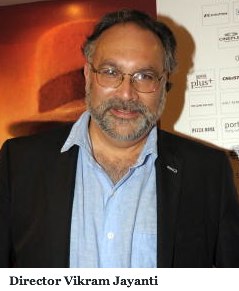
Welcome back to Moment of Truth, Movieline's weekly spotlight on the best in nonfiction cinema. This week we hear from Vikram Jayanti, director of The Agony and Ecstasy of Phil Spector, which is now playing in New York with dates to come in other cities and on TV as well.
Kind of like grieving, there are five stages to viewing Vikram Jayanti's enthralling new documentary The Agony and Ecstasy of Phil Spector.
There's the initial WTF-y lightheadedness of seeing and hearing the legendary (if reclusive) songwriter and producer on-camera, talking over his career. Then there's the confusion of the style -- cutting almost arbitrarily from Spector's palatial manor to the sterile courtroom where he faced trial for the 2003 murder of Lana Clarkson. (He was finally convicted last year following his initial mistrial and a do-over.) Then there's nostalgia; the archival rush of hit tunes and TV performances. Next: Abject horror at the talent and life squandered and/or snuffed out in Spector's 70 years. And ultimately, disbelief. Did you really see and hear what you thought you just saw and heard?
Not unlike the James Toback's transfixing one-man show Tyson, The Agony and the Ecstasy of Phil Spector is unapologetically devoted to its controversial subject's point of view. Yet to the extent Jayanti indulges his fannish side (he pauses reverently at one point when Spector confirms yes, that is John Lennon's "Imagine" piano in the other room), he also carefully maps the influence of mortal flaws on a troubled artist's genius -- and vice-versa. Spector fancies himself a true creative and intellectual force on par with Bach and Galileo, but with a drive fueled more by rage than curiosity (a suicidal father will do that to a kid), was there ever any chance he would emerge as anything less than a pariah? Should we separate the man from the murderer, or was Clarkson's shooting death in fact Spector's most tragically operatic expression?
I don't know if the answer can be found in Jayanti's film, but Agony and Ecstasy does reward the search. It also raises the question of what counts as fair use of a soundtrack and what it's like to be on the receiving end of one of rock and roll's most intense glares. Jayanti spoke with Movieline this week about all of the above.
What drew you to Spector -- and how did you get anywhere near him?
I've done a lot of films about the arts for the BBC over the years, and I heard that the head of the series that I usually do my films for [Arena] was thinking of making one in the run-up to Phil's trial. They wanted to talk about his music. And I said, "Gee, if you're going to fund a movie about Spector, I'd really like to make it. I think it's such an interesting moment to do it." They said, "Sure," and so I sent him a letter. I got his address off the CourtTV Web site. The BBC and I together FedExed a letter: "Now that your trial is coming, you've got to be worried that your musical legacy is going to be eclipsed by the sensational trial. It's probably a good moment for someone to make a film about your musical legacy. We can't ignore the trial, but I'm interested in making a very serious film about your music and counterpointing it with the trial footage."
And everybody said, "He's recluse; he'll never answer." And the next day he e-mailed me and the producer Anthony Wall back. He said, "It sounds like you have an interesting idea that sounds very authentic. Please come up to the castle and let's talk about it." I think maybe no one ever asked him before? Or maybe it's just that he thought someone coming from British television might give him a fairer hearing than the American tabloid stuff talking only about the trial. Maybe it's because I'm a sort of serious filmmaker, and he'd seen a few of my films. He actually had copies of three of them. I think he thought we'd take him seriously -- and I'm only speculating, but maybe he thought the film would help his cause.
You mentioned the intercutting of the trial with the interviews. It's not a traditional courtroom intrigue though; it has an almost impressionistic feel. How did you settle on its style?
I decided that I didn't want to do a usual documentary with all the talking heads going around talking about the '60s and their musical achievement. I didn't want to interview his former wife and get all the stories of domestic violence that Ronnie Spector has published about. I wasn't going to do any of those normal thing. I don't want to make predictable documentaries. What I thought I would do is do a film that allowed us to really feel what it would be like to be Phil Spector at this moment in his life. I wanted to do a very intimate psychodrama. I thought that I would talk to him about his music and whatever he wanted to talk about, and he knew that he would have no editorial input. I'd have full editorial independence; it's part of BBC's policy. But I figured the trial would provide the opposite of whatever Phil said about himself. There's going to be a lot of negative information; plus it's a murder trial. And I thought that would have its own drama if I did the trial in chronological order, just in broad strokes -- what the prosecution was saying, what the defense was saying.
Then I wanted to play his music, but I wanted to play every track in full. His legendary brilliance as a producer -- I wanted the audience to be able to hear and comprehend and apprehend the nature of his achievement in the same way he intended as a producer, which means hearing the whole song. So that was three elements.
And I thought I'd add one more -- sort of the Wall of Film as opposed to the Wall of Sound -- and that was the critical commentary by the music critic and journalist Mick Brown, who's also Spector's recent biographer. I thought I would run his critical commentary on the music while Phil wasn't actually talking about them. So it was a very simple conception in terms of structure, and I thought it would be shaped by where the trial was heading.
 The critical comments are a really interesting choice, though I wasn't always sure they were the right choice. What was behind that decision?
I wanted to have something going on that would keep the audience listening with a critical ear. Part of it was that, and the other was that we used all the music using the legal principle of fair use. You can use other people's intellectual property in your own artistic creation if you are using it for the purpose of review and criticism.
Ohhh.
And what I wanted to do was not only have the audience reflecting -- while the music was playing -- about the nature of the achievement. Phil's telling you stories about those particular tracks and how they were made and what was behind them. And when he's not talking, Mick was telling you what the result was from the point of view of a very accomplished critic of music. So that was one thing for the audience -- but also making sure we fell firmly within the guidelines of fair use. It helped build that case. So at times it might seem like it may be interfering with what you might be watching, but in fact it's the enabling factor that allows us to play the whole song. I wouldn't have done it if I didn't think it added to the film. And as a filmmaker who works visually -- in frames -- in the beginning it struck me as distracting from what was in the picture. But the more I watched the film, the more I thought it really added. I'm actually replicating Phil's process of layering, and I began really enjoying it.
I did get the sense there was some type of experimentation going on. Did that fiddling-with-knobs quality carry over to other parts of the film as well?
Let me put it this way: I try when I make a film to just do whatever works. I don't have an ideology about it or anything. At the time, I thought it was working. And I'm desperate not to make predictable documentaries. I still think the D-word is not necessarily a good word in terms of making people want to go to the movies. And I think a lot of that is because they're so full of talking heads and dead space and whatever. So to that extent, you experiment in whatever way you can to try to make it into a drama, and you find whatever form serves it. Looking back on it, I know it seems quite experimental what we were doing. But all I was trying to do was keep the story working.
I had to watch it twice, because I was so jarred by Spector's long, fixed gaze -- and it wasn't even on me. I presume he was staring at you as the interviewer?
Yeah.
How did it feel being the object of that gaze?
Well, I've worked with quite a lot of larger-than-life personalities -- and they're often troubled people for all their genius. And you are always sitting, subjected to their gaze. What's interesting is however complicated and nuts they are, there is also a cold, calculating, clear piece of them. There's a piece of Phil, for all of his... shall we say "eccentric" conversation, which is completely lucid. So you certainly know you have a strong analytical stare coming in your direction. Because of all the stories of Phil, you're also a little bit nervous. He's famous for his temper and bad behavior and intimidation and so on. But what I was amazed by was how willing he was to have a proper conversation. Then, when you look at it on film and you see that the eye is kind of watery and his hand is shaking, you realize from the outside that it's kind of a disturbing image. But when you're inside it, you're just captivated by the sense of connection.
I actually stopped listening to him for a while because I was so interested in how he looked.
There is one moment where I slow the film down just so you can look at his face, quite early on. I guess I was feeling the same thing you were describing, just intuitively rather than consciously. It is an extraordinary face, an extraordinary presence.
Considering how that presence has declined from previous footage of him, do you think he talked to you and gave his side because it's now or never?
I would speculate that that was a lot of his motivation. This wasn't a conversation that would have happened if he wasn't going into his trial for murder. I think he probably felt -- whether or not it was his last chance to say anything -- it was probably his best shot at telling his side of how he viewed if not the actual events of the night, then at least his situation. I think he had a great anxiety to express himself. And that's what I'm interested in. I'm not interested in judging what my subjects are saying. I'm happy to let the audience do that. I'm interested in getting my subjects to where they're kind of naked? Where there's no skin between us and him? I'm very much trying to get a sense of what it feels like to be him. I think that that the mode we used allowed us to do that. I don't think you'll get much closer to someone's tormented inner life than in this film.
 Subscribe to the new Movieline on YouTube


Comments
A day or two is the most you should leave your cat at home alone. Three weeks is way too long. What about the cat litter!? Three weeks of uncleaned cat litter is disgusting...the poor cat would probably start peeing all over since the litter is so gross. Don't you have a friend who can watch it? If not, board the poor thing, don't leave it home alone for that long.