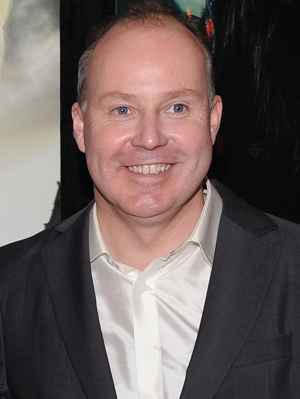
This morning, Movieline sat down with British director Yates, who has helmed the final four Potter films (Harry Potter and the Order of the Phoenix, Harry Potter and the Half-Blood Prince, Harry Potter and the Deathly Hallows: Part 1 and Part 2) and earned rave reviews from fans and critics for masterfully closing out an eight-part franchise. On a second-floor balcony overlooking hoards of fans in robes and wizard hats, Yates reflected on Ron and Hermione's dreaded kiss, his Academy Award campaign -- and at long last, life after Harry Potter.
How are you unwinding from six years' worth of Harry Potter?
I'm having a nice time, chilling out, traveling. [My wife and I] just went to Bali and stayed in this nice place where we did yoga and pilates and meditation. It was great and really healthy. Then we went to Singapore, which was fantastic. And I'm working on some scripts for next year. It's been really nice because Potter was so intense. It never stopped! It was like [long groan], making one after the other after the other. I needed some time to decompress.
I'm curious because when Warner Bros. announced that you would be directing Harry Potter and the Order of the Phoenix, producer David Heyman said that they wanted you because you know how to push actors into giving the best performances of their careers. How did you get better and better performances out of Daniel Radcliffe, Emma Watson and Rupert Grint four movies in a row?
I love actors, and I just feel very empathetic towards the characters. To me, they are very real. So every time I did a scene with Dan or Emma or Rupert, their characters were very real. You feel their journey and an enthusiasm for what they are dealing with. I think that helps. There are some directors that are very technically oriented and are more into putting the whole process together and there are some directors who are more focused on actors. I like a bit of everything though. I like making what they do as real as possible. That's what gets me up in the morning. For me, when you have a group of actors together doing a scene for the seventh take and you feel that something has happened -- not just that I can see but the person who is making the tea or loading the clapper board, if they can feel it. It's tangible. I always love those moments where you feel as though you've witnessed something that feels that real and incredible. The extras respond -- everyone does.
Do you recall one moment on Deathly Hallows -- Part 2 when the entire cast and crew responded like that?
There were a couple key moments where everyone was really interested. Everyone gathered around when Ron and Hermione had their first kiss because they had never kissed before in any other film or in real life. It was a very sweet and charming moment because [Rupert and Emma] are best mates. They have a mutual amount of affection for each other and were very nervous about the process of snogging each other. It was a really lovely morning though because it was such a nice atmosphere on set. When they did finally kiss, it was just such a relief.
How did you calm their nerves beforehand?
Well, I talked to them each individually beforehand and said that the way to get through this is to give yourself to your character. "For God's sake, don't be Rupert. You need to be Ron and remember all of the times you've wanted to kiss this girl all this time. Just become Ron, even before we start turning over -- just be Ron." I said the same thing to Emma. "Just give yourself to the character. Let the characters take over. Then it will be easier." Because they are like brother and sister. [Laughs] So that's what they did. And Emma is very smart. She knows that I do a lot of takes so she figured if she really went for it in the first or second take, it would be in the can and we'd be done.
So how many takes did you end up doing?
We did three or four, I think. The take we eventually used is really funny though because you can see Emma's thought process -- "I'm going to go for this. I'm going to go for this big time and then it'll be nailed and we'll be done." Rupert wasn't prepared for that so if you watch the DVD you'll see Emma's determination and Rupert looking slightly vacant and then she just goes for it and Rupert is in a state of shock.
Was it a closed set?
It was -- just to make them feel comfortable. It was nice. They came back to watch the monitor afterward and it was such a charming moment -- just watching them watch that moment unfold and being really thrilled with it.
Harry Potter fans have such an intense relationship with these movies. Did you as the director ever feel like you had a strong relationship with the fans?
The fans are just amazing. They are incredible because they are so supportive and they are the reason we are here now. They are the reason we've made so many films. It's because people have come to see those films again and again and again. I have a huge respect for the fans but I had to go by the material. If you looked at the comments online, you'd see that some people loved certain things, hated certain things, were arguing about certain things. It would be impossible to take a lead from the fans. You just hope that you fall in love with the material like you fall in love with the material. I get letters and I'll think, "Well, that's really interesting. That's really helpful." But the fans disagree amongst themselves about who they like and don't like so it was always the material that I was directed by. It was always interesting to get those letters to see what people didn't want left out. Unfortunately, sometimes we had to leave those things out.
Is there any decision you regret after reading fan feedback?
You know, I'm proud of the films. I think they're good. I didn't want them to be exact replicas of the books. That felt wrong to me. After making each of these movies, we had test screenings and always asked, "How many people have read the books?" Actually, year on and year on, you'd be surprised at how few people had read the books. So I had to be aware that I was making these movies for the fans and for the people who had never read the books. We had to serve two audiences in a way.
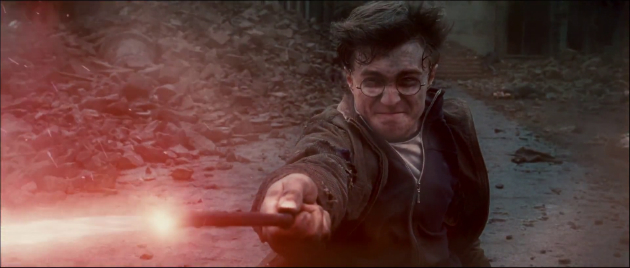
You managed to successfully close out the Potter franchise on a note that both fans and critics approved of, which seems like an impossible task for material this beloved. Are you able to wrap your mind around that accomplishment?
At this point, it would be impossible for me. I finished it three months ago and even though I've had two months off, it's still kind of a [shakes his head]. Maybe in time I can think about that.
What has kept you grounded throughout this whole experience -- which has grossed over $1 billion worldwide?
The whole production of Potter is in a very unglamorous place. It's really dusty and when it rains, the rain comes in through the roof. Everyone mucks in together and there are no big egos. The young cast is very down to earth. It's a family atmosphere and everyone likes each other. There are no politics. The only time you lift off the ground a little bit and think, "Oh, this is interesting" is when we come out of our little bubble and see how much people like this stuff. It was very weird when I came to [the Wizarding World of Harry Potter] for the very first time, walking down the street and thinking, "Oh my. They've got our sets here. There are people here. There are lots of people here. Isn't that strange?" It's when you encounter it in the bigger world that it feels not-very-grounding and that's slightly dangerous. But you have to get on with your life.
Do you think you'll have a hard time adjusting from Harry Potter to your next film?
There is a little adjustment issue. There is.
How so?
I've got a couple of really lovely scripts and I'm going to make -- well, I haven't decided yet. But the people who are making the movies are being very patient with me. So far. I have to give an answer when I go to Los Angeles in a couple of weeks about which one I'm going to do.
What types of projects are you deciding between?
They're not huge movies. I'm deliberately not doing a huge movie. I've been offered huge movies and that's not what I want to do now. I want to do something really small and intimate. After making Potter, I need to focus on something small.
What about St. Nazaire?
That's for two or three years down the line. It's a wonderful story about these marines who are on this impossible mission. It's a true story with fascinating characters but I'm not going to make it next. In two to three years.
Can you see yourself ever making films in Hollywood?
I'm not sure. I don't know. Maybe. A couple of the projects I love are based in New York actually. I'm not sure if that qualifies as Hollywood.
Are they dramas?
There's a comedy -- a really wonderful comedy. And there's a wonderful script about a girl that self-harms that is intense. A really witty film about mental illness. [Laughs]
I wouldn't have figured that for your next project.
It's not an obvious choice but it's just very moving and funny and odd. I've read so many scripts every day and sometimes, you come across something and say, "This is unlike anything else." That's what made me want to make it -- because I've never read anything like it.
Warner Bros. is making a big push for Deathly Hallows -- Part 2 at this year's Academy Awards. How are you involved in that campaign?
Yes. Well, I'll go around and do some junkets and interviews. We made the decision collectively. It was the last movie and we're very proud of it and we just wanted to push it.
Who decides which actors or categories Warner Bros. will campaign for?
We all do. [The studio] sends us a list basically [of who they want to campaign for in what categories] and we get to approve it basically. [Producer] David [Heyman] is probably going to be doing a lot more work on it than I am, actually, but we all want to help the film. I don't know, it's a long shot. It's always, kind of, we've failed to ignite the Academy's interest. So we're all really laid back about the fact that we might have a big push and might not get any nominations. We're all prepared for that. But I think Stuart Craig's [production] design deserves a nomination, Alexandre Desplat's music, Tim Burke's visual effects -- and maybe the movie itself, I think it's a strong movie. We're going to make a push.
If only all of these fans could help.
[Laughs] Oh, that would be a walk in the park!