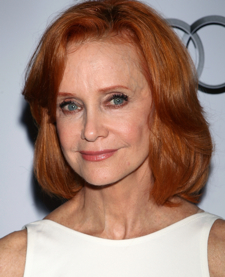
In the new series, Kurtz plays the sassy mother to Molly's (Melissa McCarthy) plus-size teacher. While promoting the new CBS show in Beverly Hills last week, Movieline met the actress to discuss her acting "eureka" moment, her new gig and her attraction to the Mike and Molly creator.
First off, what are the chances of a Pushing Daisies reunion?
There hasn't been really any talk, at least that I've heard. Bryan Fuller, the show's genius creator, is putting out a comic book, and he has always talked about doing a film of it, so who knows?
Sitcoms used to have a reputation for creating broad characters -- certainly more broad than in hour-long dramas. Do you find that still to be the case?
I think that used to be true. I think maybe it's generally more true that in an hour drama, without a laugh track, you have a more chances to be serious. But I think the half-hours have gotten very, very sophisticated and refined. I think a lot of that is due to [Mike and Molly creator] Chuck Lorre, who really refined the art. There is always someone who might say that these character are really broad. In this show, everyone's characteristics are heightened -- but so brilliantly. It all depends on how it's done. The subtlety depends on the writing and we are really lucky on this show to have Mark Roberts and Chuck Lorre writing this great stuff that is genuinely touching and funny.
Were you more attracted to the Mike and Molly script or the fact that Chuck Lorre was producing?
Well, it's hard to get around the Chuck Lorre attraction. You love to be in good hands as an actor. I come from the theater where the actor has so much more onstage responsibility but on television, the [writers and producers] hold more of the responsibility. So it's important to be in good hands. It's also crucial to me, when I read the pilot, to be moved and this really touched my heart.
What part of the script moved you most?
You see [Billy Gardell's character] try to ask Molly out, and he is so awkward about it. She wants him to ask her out, too, but he just can't. He keeps failing. But I read the pilot and then met with Chuck. It was kind of love at first sight for me, and obviously I did something right because he wanted me. But it's just something I am very, very glad to be a part of. What's really important to me, too, is that I am playing someone I haven't played before.
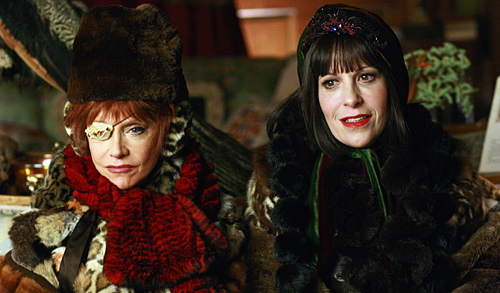
Of all of the characters you've played in television and film, which would you say was the most well-developed?
I have done so many guest shots in the last year. I don't know. Sisters was more of a real situation. Pushing Daisies was so wonderfully bizarre. Ordinary People was one of my favorite movies that came later when I was already an actress.
When did you know that you wanted to be an actress?
Well, I originally wanted to be a prima ballerina, and I was pretty good at ballet. I just knew when I got to high school that I wanted to act. I did a scene from Dark Victory, which was a Bette Davis movie, in school. I did that monologue when she is going blind, and that scene and I somehow connected, felt that eureka, that epiphany moment when you find you identify with something. I felt like I could connect better with a group of people when I am being someone else than I can when I am myself, one-on-one. It's kind of nuts.
Even if you are in front of a theater full of people?
Yes. It's easier for me to go onstage in front of a thousand people than it is to have a one-on-one with a person. I am talking about a person that I don't know terribly well. If they were to say, "Let's have dinner," that would make me a little nervous to be in that situation. But whenever I step onstage, I can just relax. That is kind of where I live. But that first time onstage in high school was the first time I had that unbelievable connection with the audience. I thought, "Whoa, I want to do this all day long." I am sure it's the same as the geek in high school who discovers science.
Why do you think you responded so powerfully to the feeling of being onstage?
I was very shy and it was made worse by the fact that we had to move around all the time because my dad was in the Air Force. I remember once when I was in seventh grade something happened that was like magic. I was plain and very shy. I remember that I made a remark to a few people and they laughed. They really looked at me for the first time, and they engaged me in conversation. It wasn't a sexual thing -- that they wanted to sleep with me or anything. Discovering that I could make them laugh was like finding another identity. That happened before I knew that I wanted to be an actress.
Some comedians talk about this obsessive desire to please their audience -- they need those laughs and that approval. Do you feel that you want to please your audience similarly or is your onstage experience more about just connecting with people?
It wasn't about pleasing the people, for me. It was about this amazing connection that I could have that I couldn't have as me, as Swoosie, but that I could by being another person. I got to do and say things I never would. The further my character is from me, the more fun it is to play. Sometimes, it is hard to just be yourself.
[Getty Images / David Livingston]